AppVetter
HomeApp ReviewsMaps & Travel › Uber - Request a ride
safe
Uber - Request a ride icon

Uber - Request a ride

4.5
CategoryMaps & Travel
Download500M+
PriceFree app
RatedEveryone
RequiresAndroid 9.0+
DeveloperUber Technologies, Inc.

Screenshots

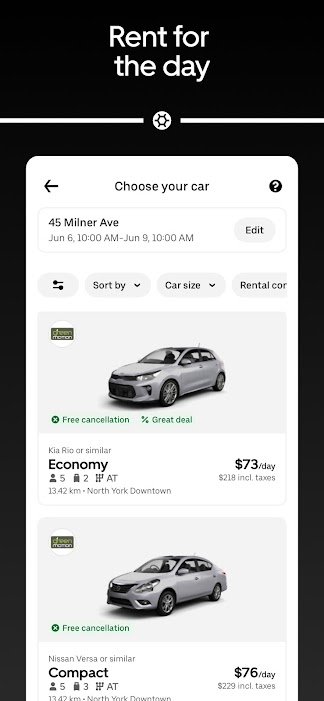
Uber - Request a ride screenshot

About this app

Hailing a car by tapping a phone screen felt like magic in 2010; today Uber is infrastructure in more than 70 countries. The app covers ride-hailing in several vehicle classes, plus scooters, bikes, and intercity options in some markets, and it shares an account with Uber Eats. Fares are quoted upfront before you confirm, payment happens in-app, and rider and driver rate each other after every trip.

That convenience runs on location data, and Uber's record here deserves scrutiny. The company once collected rider location for a period after drop-off before walking the practice back under public pressure, and it concealed a 2016 breach affecting 57 million users for about a year. Surge pricing, the two-way rating system, and driver-side economics all shape the experience in ways worth understanding before you ride, and we cover each below.

Airport runs and late nights

Uber's dispatch coverage at odd hours is its strongest case. Airport pickups have designated zones at most major hubs, the fare is agreed before the car arrives, and trip sharing lets someone follow your route home in real time.

Travelling abroad

One account works across most of the roughly 70 countries Uber serves, sparing you the local taxi negotiation and the currency arithmetic. Payment stays on your saved card, and the app's language does not change with the country you land in.

Households without a car

For people who drive rarely, pairing Uber with public transport can undercut the cost of ownership. Scheduled rides handle recurring appointments, and family profiles let you arrange and pay for someone else's trip from your own phone.

Upfront pricing and surge

Fares are quoted before you request, and Uber generally holds that price even if traffic shifts. During high demand the quote rises: surge is baked into the number you see rather than shown as a multiplier, so compare against a second app when a price looks steep.

Live trip tracking and safety tools

Every trip shows the driver's name, photo, plate, and live position. A share-trip option sends your route to chosen contacts, an in-app emergency button reaches local services, and audio recording of trips is available in some regions.

Two-way ratings

Riders rate drivers and drivers rate riders, and both scores matter: a low rider score can mean slower matches. The symmetry keeps behaviour in check on both sides, though it also discourages honest low ratings after an awkward trip.

One account, many services

The same login covers vehicle classes from budget to premium, bikes and scooters in some cities, ride scheduling, and Uber Eats delivery. Uber One, the optional subscription, discounts rides and waives some delivery fees.

Privacy & Data Safety

Location sits at the heart of Uber's data collection: precise pick-up, route, and drop-off history for every trip you have ever taken, tied to your identity and payment card. The company's record includes real missteps — a stretch of post-trip location collection it later reversed, and a 2016 breach affecting 57 million riders and drivers that it paid to conceal and disclosed only in 2017. Current controls are better, but the history justifies caution.

  • The app works fine with location permission set to 'only while using the app'; Uber abandoned the post-trip tracking it introduced in 2016 after public backlash, so there is no need to grant always-on access.
  • Trip history is retained by default and tied to your account; account and data deletion can be requested through the in-app privacy centre.
  • The 2016 breach exposed names, emails, and phone numbers of 57 million users plus driver licence numbers; the cover-up brought regulatory penalties and, later, the conviction of Uber's former security chief.
  • A phone number and payment method are mandatory. Ratings you give drivers are anonymised, but your pick-up and drop-off points are visible to the assigned driver.

Advantages

  • Upfront fare quotes remove the classic taxi-meter uncertainty
  • Wide international coverage on a single account
  • Strong safety toolkit: trip sharing, emergency button, driver identity checks
  • Location permission can stay at 'while using the app'

Updates

Uber ships new Android builds frequently, often weekly, though most visible change happens server-side: pricing logic, vehicle options, and safety features roll out city by city rather than by app version. Release notes are famously vague, so the version number tells you little about what actually changed in your market. Old builds eventually lose server compatibility and force an upgrade.

  • Expansion of safety tooling, including trip audio recording and rider verification in more regions
  • Deeper bundling of Uber Eats and the Uber One subscription throughout the app
  • Teen accounts and better options for booking rides on someone else's behalf

Editor's Assessment

Our verdict

Uber does what it promises: a car appears, the price is known in advance, and the trip is tracked end to end. That reliability earns it a place on most phones. Treat it as a service with a long memory, though — every ride is logged against your identity, and the company's past conduct around that data was poor. Keep location on 'while using', sanity-check surge quotes against an alternative before confirming, and it serves well.

What works

  • Upfront fare quotes remove the classic taxi-meter uncertainty
  • Wide international coverage on a single account
  • Strong safety toolkit: trip sharing, emergency button, driver identity checks
  • Location permission can stay at 'while using the app'

What to know

  • Surge pricing can multiply fares with little warning at peak times
  • A documented history of privacy missteps, including the concealed 2016 breach
  • No longer reliably cheaper than taxis now that early subsidies are gone
  • Driver pay and gig-work conditions remain contested in many markets

FAQ

Why did my Uber quote suddenly go up?

You almost certainly hit surge pricing, which raises quotes when demand outstrips available drivers — rush hour, closing time, bad weather, big events. The higher price is always shown before you confirm, never added afterwards. Waiting ten minutes or walking a few blocks away from the hotspot often brings the quote down noticeably.

Does Uber track me when I am not riding?

Not if you set the location permission to 'only while using the app', which the app fully supports. Uber did collect location for a short window after drop-off starting in 2016, but dropped the practice following criticism. Your complete trip history, however, stays stored on your account until you delete it.

Was Uber ever hacked?

Yes. In 2016 attackers obtained data on 57 million riders and drivers, including names, emails, phone numbers, and driver licence numbers. Uber paid the attackers and kept the incident quiet until new management disclosed it in 2017, drawing fines from regulators. App passwords were not in that dataset, but it is still a good reason to use a unique password here.

Download this App

Similar Apps

More from Maps & Travel